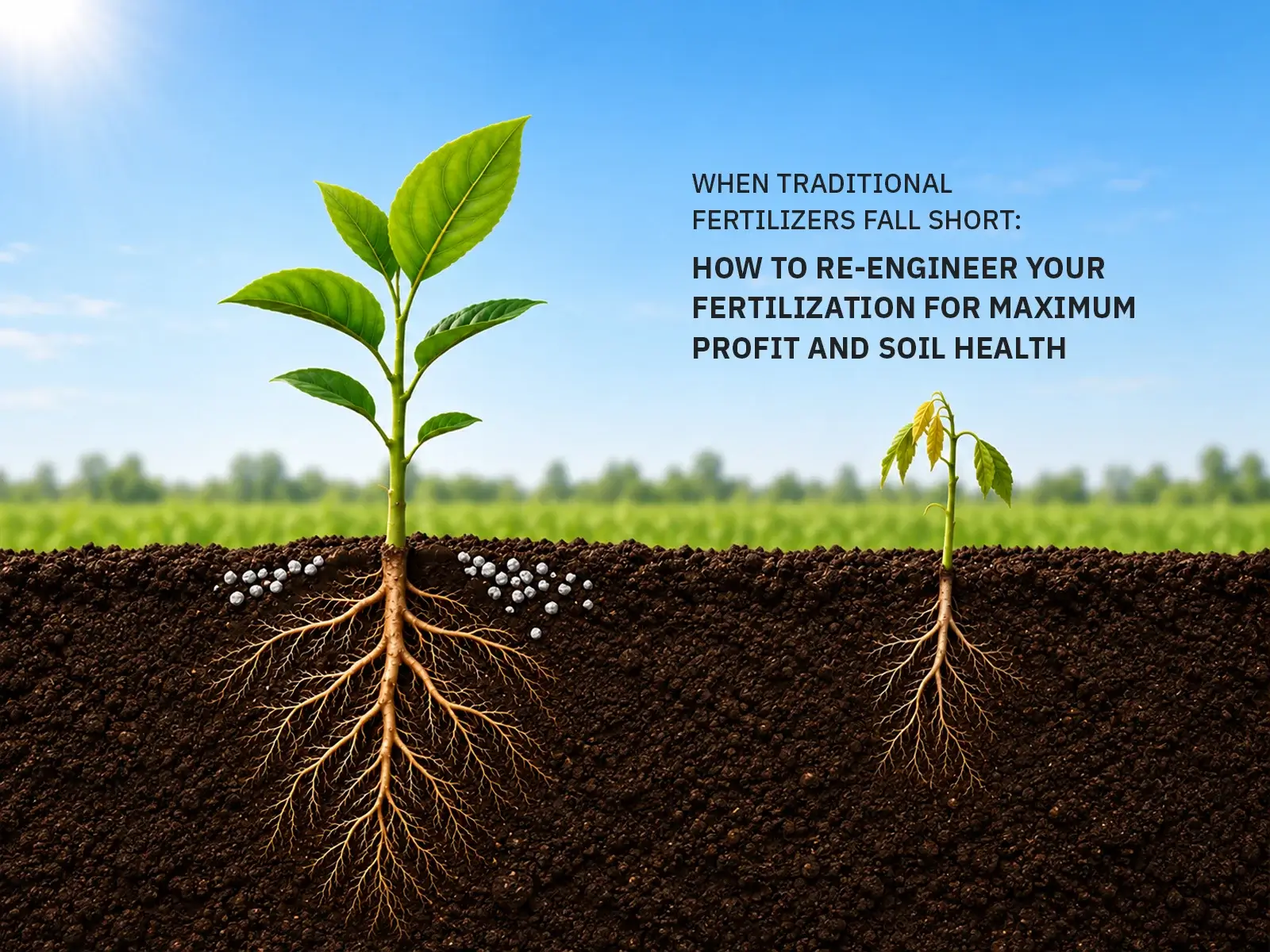
In modern agriculture, farmers and investors face a daily challenge that directly impacts their bottom line: Why don’t fertilizers give the same strong results in every type of soil? Simply put, the answer lies in the diversity of soil environments and their complex chemical reactions. Traditional fertilizers are designed as a one-size-fits-all solution, but they often struggle with the unique challenges of different soils, whether they are sandy, alkaline, or acidic. This leads to costly problems like nutrient fixation, leaching, and waste. Here is the secret: With a few smart adjustments and additions, you can turn a standard fertilizer into a powerful tool to get maximum results with minimum quantities, while protecting your soil.
Fertilizer Engineering: Why Do We Need Adjustments and Additives?
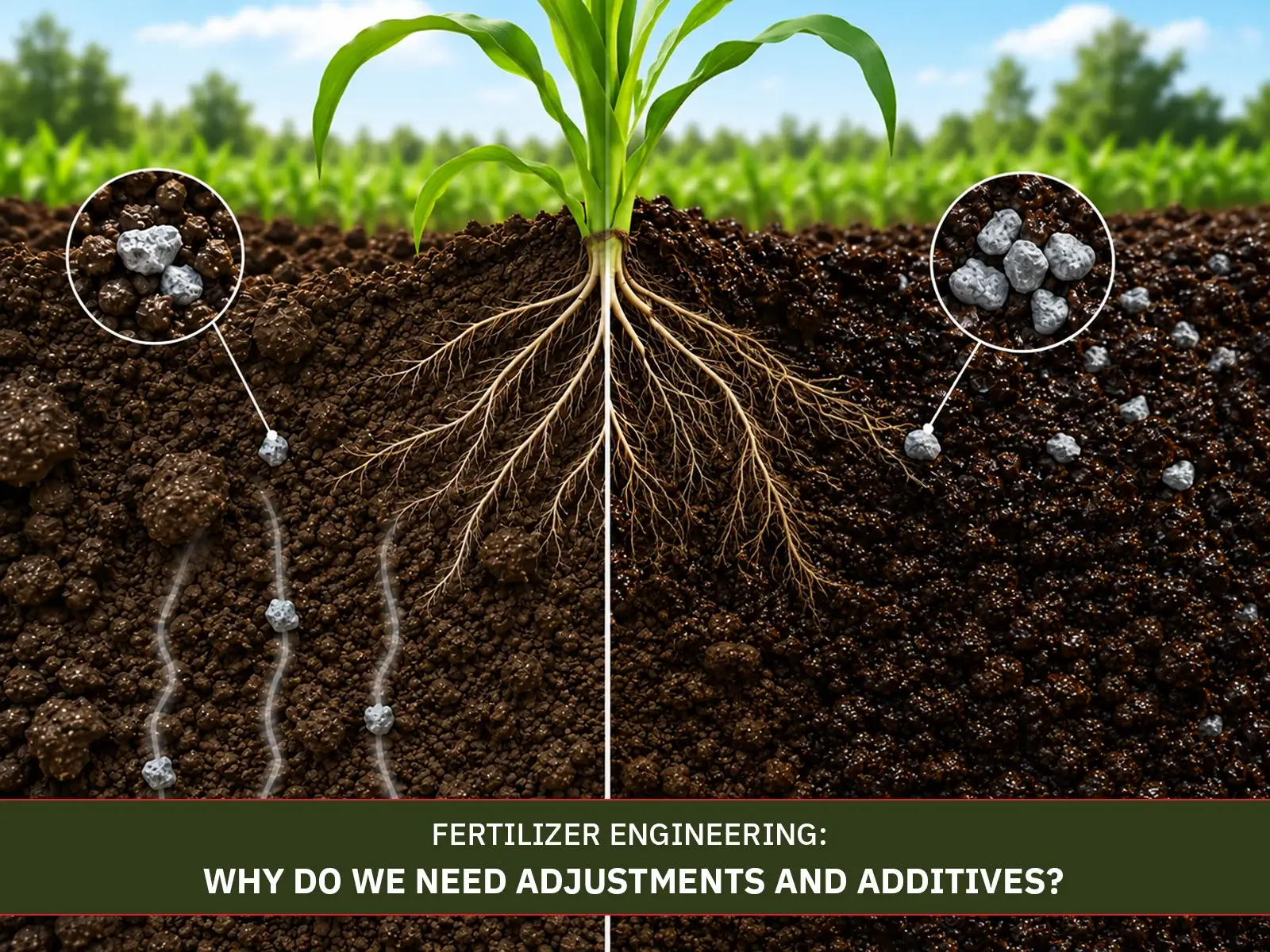
The natural chemistry of soil doesn’t always welcome ready-to-use nutrients. For example, when phosphorus is added to certain soils, it gets locked or fixed, preventing roots from absorbing it. Meanwhile, nitrogen and other elements can easily wash away with excess irrigation water. This is where modified fertilizers or precision soil amendments come in. This strategy aims to:
- Stop Nutrient Loss: Prevent nutrients from washing away or turning into unusable forms.
- Maximize Efficiency: Get the highest growth and yield rates using less fertilizer, which lowers your operating costs.
- Match Soil Needs: Break the negative chemical reactions between the fertilizer and unique soil traits.
An Inspiring Success Story: Calcium Carbonate with TSP in Acidic Soils (The Kenya Experience)
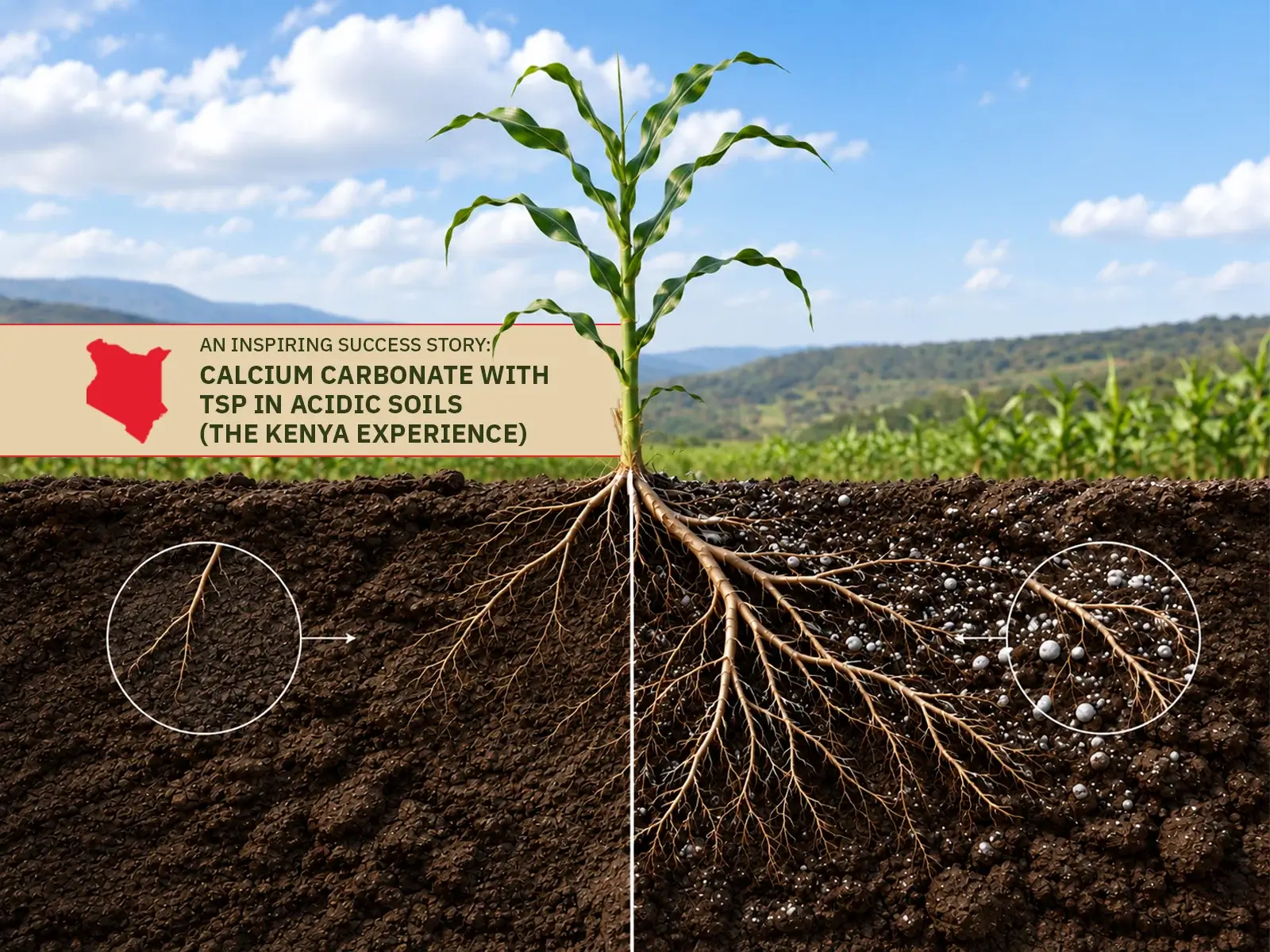
To see how this works in the real world, let’s look at a successful agricultural application tackling severe soil challenges. In many developing agricultural regions like parts of Kenya, soils suffer from high acidity (low pH). This excessive acidity blocks phosphorus: it quickly reacts with free iron and aluminum in the soil to form hard, insoluble compounds, leaving plants starving for phosphorus despite regular fertilization.
The Smart Solution:
Researchers and experts introduced a clever modification: adding calcium carbonate to Triple Superphosphate (TSP) before or during application in acidic soils.
What Happened? (The Amazing Results):
- Localized pH Adjustment: Calcium carbonate acted as a gentle neutralizer right around the fertilizer granules, softening the harsh acidity.
- Protecting Phosphorus from Fixation: This adjustment kept the soluble phosphorus from binding with iron and aluminum, keeping it available and ready for plant roots to absorb efficiently.
- Saving Nutrients: The trial in Kenya proved to be a massive success. Fertilizer efficiency shot up, nutrients were protected from loss, and this directly translated to stronger root systems and higher crop yields in a soil type that usually resists standard fertilizers.
Conclusion: Invest Smartly… Don’t Waste Your Resources
Successful and sustainable farming doesn’t depend on how much fertilizer you throw at your land, but on how efficiently your crops use it. Smart modifications and thoughtful scientific additions like combining soil enhancers with concentrated fertilizers make the real difference between wasted money and a rich, profitable harvest. Don’t treat all soils the same way. Give your land the smart adjustment it needs, and watch the difference in your crop quality and yield
Note: This article was authored by Dr. Mohamed Elsayed Abdelalim, PhD, a specialist in physical chemistry with over 15 years of experience in the fertilizer industry
Available in 50 kg bags, jumbo bags ( with/without pallet), bulk in a container