

In modern agriculture, fertilizers represent a massive financial investment aimed at boosting productivity and maximizing returns. To save time and effort, many farmers and technicians resort to direct mixing of different fertilizer types before broadcasting or applying them through irrigation systems. However, what many fail to realize is that fertilizers are not just inert powders sitting harmlessly side by side; they are active chemical compounds. Lacking awareness of chemical and physical compatibility rules can turn into a silent disaster, leading to fertilizer deliquescence, caking, or the volatilization of essential elements. Consequently, the farmer faces a double loss: wasting the fertilizer’s value and ruining application equipment.
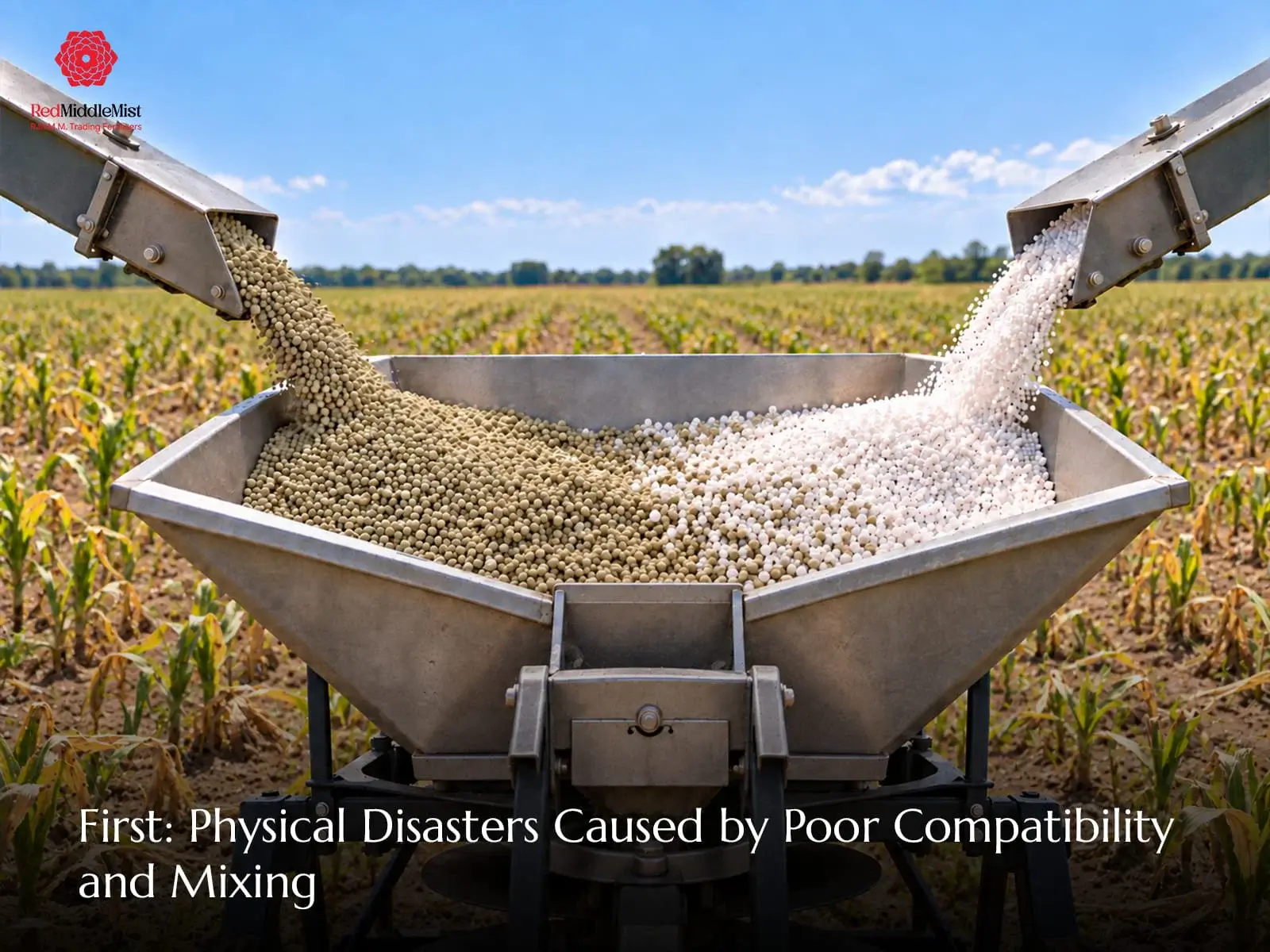
First: Physical Disasters Caused by Poor Compatibility and Mixing
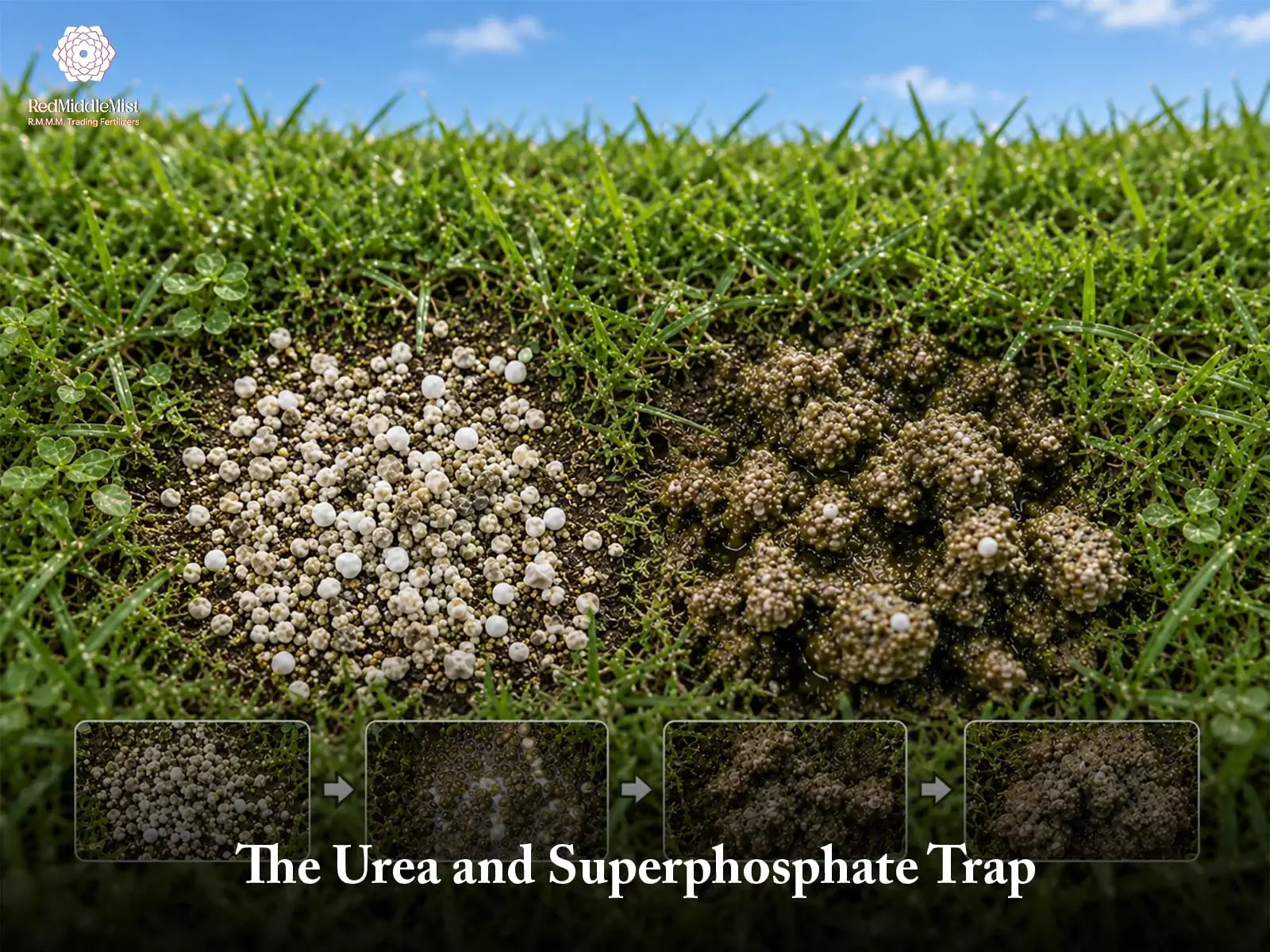
1. The Urea and Superphosphate Trap:
Chemical and Physical Reaction: When mixing urea with traditional phosphate fertilizers like Single Superphosphate (SSP), a famous physical problem known as deliquescence or hygroscopic moisture occurs. Regular superphosphate contains free water of crystallization or relative humidity linked to the manufacturing process. When urea granules touch this moisture, the mixture’s humidity sharply spikes and the dew point drops, leading to partial melting. This suddenly turns the dry blend into a wet, sticky, dough-like clay mass.
- Marketing and Field Loss: It becomes impossible to spread this mixture evenly via spreaders or fertigation equipment, and it cakes inside bags and injection hoses, causing machinery breakdowns and wasting the active ingredient.
2. Mixing Ammonium Fertilizers with Rock Phosphate or Alkaline Fertilizers:
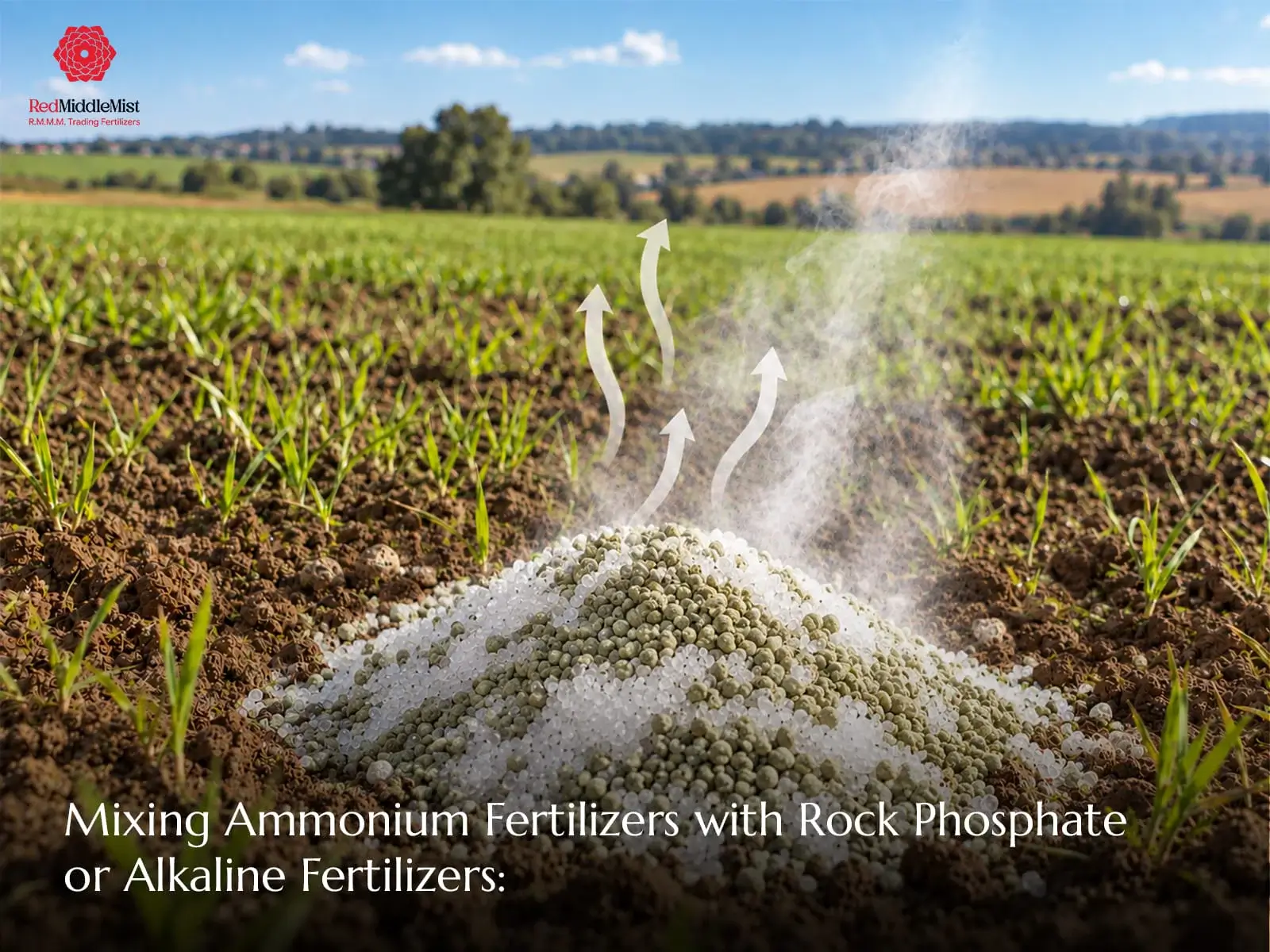
- Chemical Reaction: When mixing fertilizers containing the ammonium ion such as ammonium sulfate or ammonium nitrate with alkaline materials or rock phosphate partially treated with basic compounds, a rapid chemical displacement reaction triggers in the alkaline environment. This reaction turns stable ammonium into volatile, toxic ammonia gas
- Field Loss: The farmer notices a strong, pungent ammonia smell during mixing, serving as an explicit, direct warning of nitrogen evaporating and escaping into the air long before reaching plant roots, leaving the fertilizer stripped of its most vital component for vegetative growth.
Second: Additional Examples of Common Errors Causing Fertilizers to Lose Efficiency
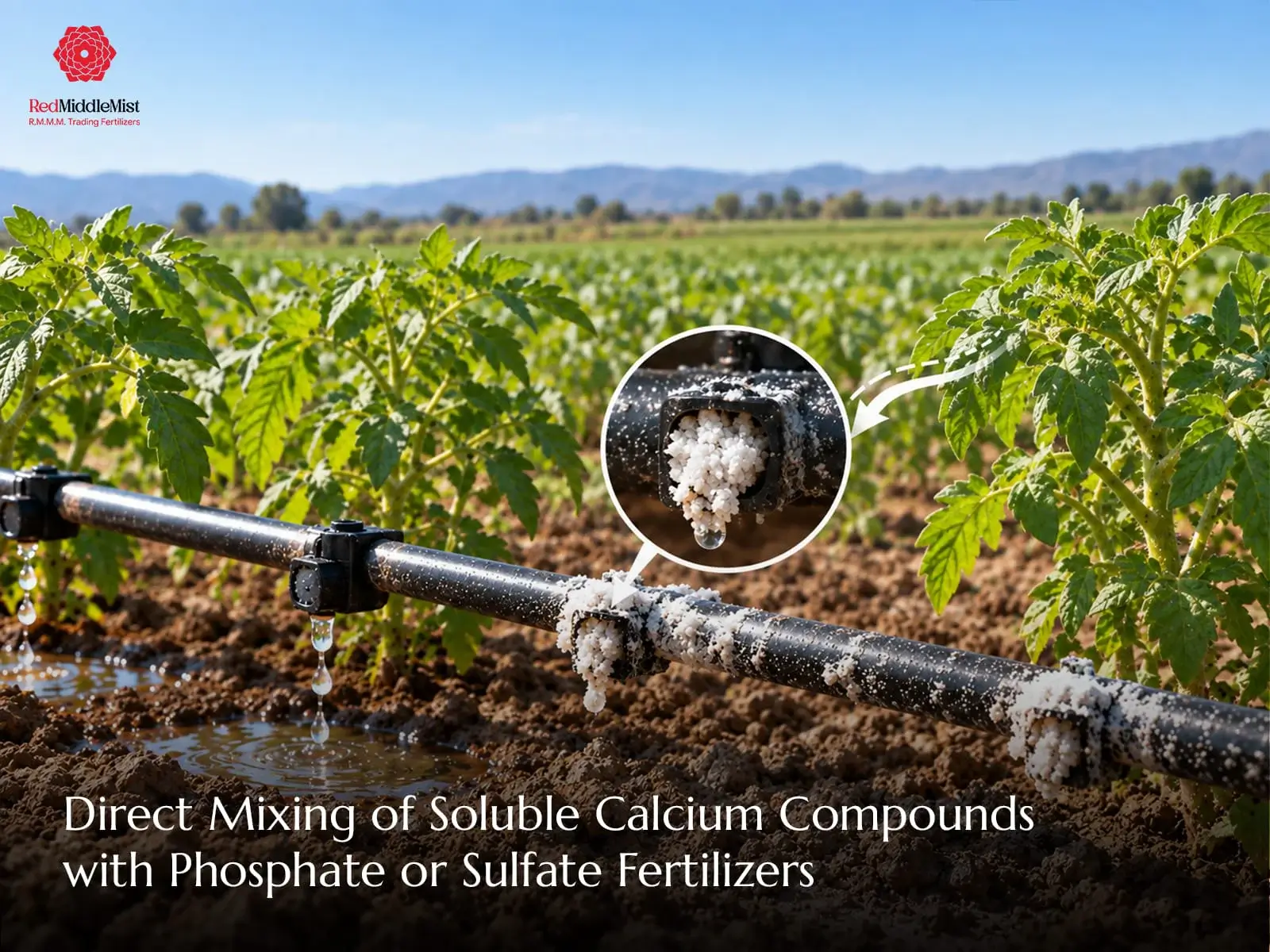
1. Direct Mixing of Soluble Calcium Compounds with Phosphate or Sulfate Fertilizers
- Common Mistake: Adding calcium nitrate with high-concentration phosphoric acid or sulfate fertilizers in a single fertigation tank (water irrigation).
- Destructive Result: The active calcium ion reacts instantly with phosphates or sulfates to form hard, insoluble precipitates (such as calcium phosphate or calcium sulfate). This leads to immediate clogging inside drip irrigation networks and complete blockage of emitters, besides depriving the plant of both elements.
2. Mixing Free Micronutrients (Non-Chelated) in Unsuitable Mediums
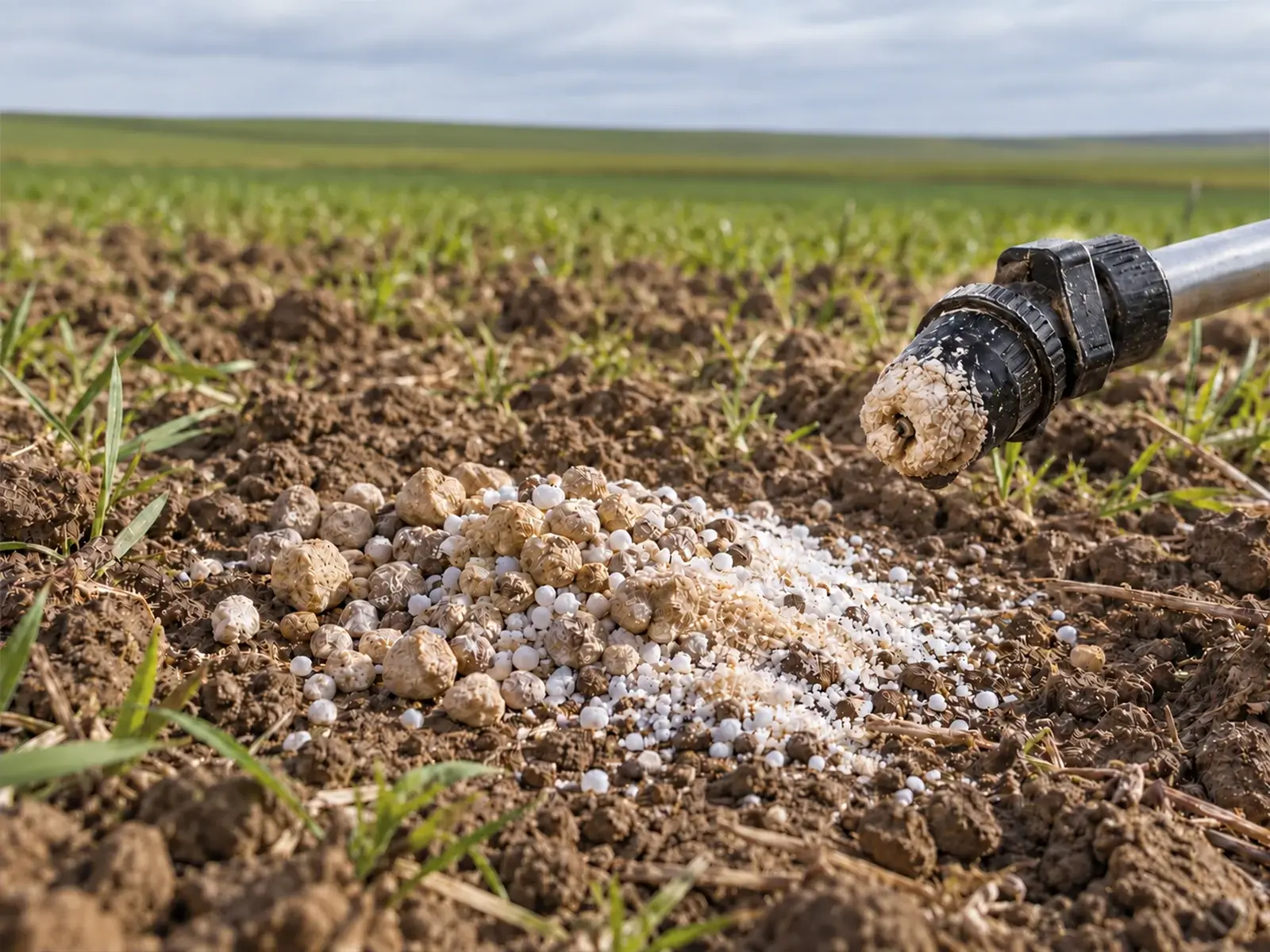
- Common Mistake: Mixing regular mineral salts of micronutrients (such as unchelated iron or zinc sulfate) with highly alkaline or concentrated phosphate fertilizers.
- Destructive Result: Reactions cause micronutrients to precipitate as hydroxides or non-available phosphates, causing them to lose solubility and become entirely useless to the plant, while forming sandy deposits that clog foliar spray nozzles.
Conclusion: How to Protect Your Agricultural Investment?
Professionalism in fertilization is not limited to buying the highest quality types; it extends to understanding the applied chemistry of fertilizer mixing. Avoiding destructive mistakes like urea deliquescence with superphosphate, ammonia volatilization, or calcium precipitation saves you thousands of pounds and ensures every nutrient unit reaches its proper place in the soil or plant.
Note: This article was authored by Dr. Mohamed Elsayed Abdelalim, PhD, a specialist in physical chemistry with over 15 years of experience in the fertilizer industry
Available in 50 kg bags, jumbo bags ( with/without pallet), bulk in a container


